The ReciScan Blog
Which Binding Should You Choose for Your Cookbook?
Coil, paperback, hardcover or a small stapled booklet? Compare the four ReciScan bindings, see real printed examples, and choose the right fit for your cookbook.

Imagine using your finished cookbook. Will it be open beside the mixing bowl every weekend? Wrapped up as a gift for your children? Or passed around at a reunion, with a small collection of recipes everyone remembers?
That is a good place to start when choosing a binding. ReciScan offers four options for its 6 × 9-inch cookbooks: coil bound, perfect-bound paperback, hardcover casewrap, and saddle stitch. Each gives the same recipe collection a different feel.
For a book you expect to cook from often, coil binding is a good starting point. For a family keepsake, you might prefer a hardcover or a traditional paperback. A short collection may suit a stapled booklet. Here is what to consider before you choose.
Coil binding for a cookbook that stays open
If you have ever tried to hold a cookbook open with your elbow while measuring flour, you will understand the appeal of coil binding.
The spiral runs through the edge of the pages and lets the book lie flat. You can leave a recipe open on the counter without holding the pages down.
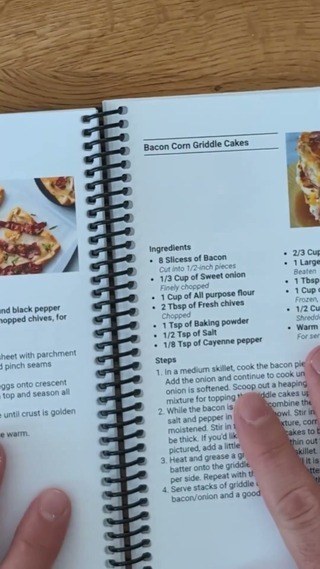
The open coil-bound example shows the spiral holding the recipe pages together while the book stays open.
This would be our first choice for a collection of everyday dinners, baking favorites, or recipes that someone will use regularly. It is also worth considering for a fundraiser cookbook: think about how buyers will use the book after they take it home.
The coil is visible, so it has a different look from a book with a printed spine. If the shelf appearance matters more to you than keeping a recipe open on the counter, compare it with the next two options.
Perfect-bound paperback for a familiar book format
Perfect binding is the traditional paperback style, with pages held together along a glued spine. It gives your cookbook the familiar shape of a book you might pick up in a bookstore.
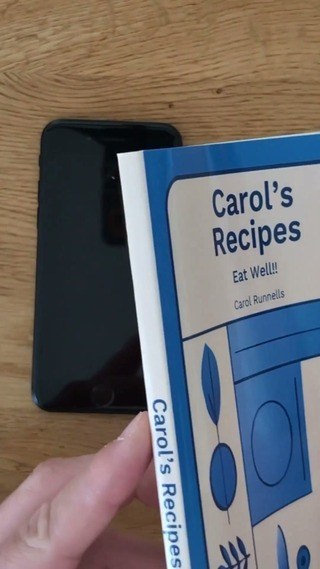
This printed paperback example shows how the front cover and spine work together.
It is a good option to consider for a family recipe collection you want to give to several relatives, or a cookbook intended to sit alongside other books on a shelf. If your book is thick enough, the spine can carry a title that makes it easy to find.
A printed spine needs enough room for lettering, though. A thin cookbook may not have space for spine text, so check the preview rather than assuming the title will fit.
Hardcover for a family keepsake
With hardcover casewrap, the cover design is printed directly onto a rigid hard cover. The example below uses a red checked design, but the binding choice and cover artwork are separate decisions.
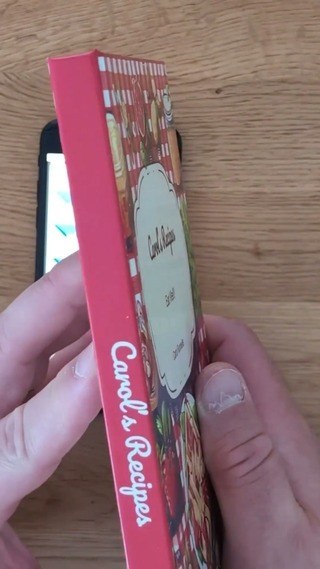
The hardcover example shows the printed spine and firm cover.
A hardcover is worth considering when the book marks an occasion: a wedding, a milestone birthday, or a collection of recipes from several generations. The firm cover gives it the feel of a keepsake.
That does not mean every gift cookbook needs a hardcover. Someone who bakes from Grandma’s recipes every week might appreciate a coil-bound copy more. Choose with the recipient in mind, then compare the printing estimate for your finished book.
Saddle stitch for a smaller collection
Saddle stitch is a booklet-style binding, with folded pages stapled along the fold. It suits shorter cookbooks, such as a collection of holiday cookies, a few family favorites, or a small reunion recipe booklet.
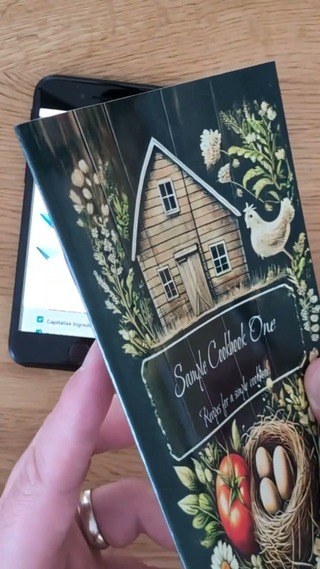
The saddle-stitch example shows the thin folded edge and a slight curve in its flexible cover.
You do not need to add recipes just to make a project feel substantial. A carefully chosen collection can make a lovely book. The main constraint here is length: saddle stitch has a much lower page limit than the other bindings.
Check the page count before deciding
Binding limits apply to the number of pages in the finished interior, not the number of recipes. Photos, chapter openers, introductory pages, and longer recipes can all affect that total.
The current ranges listed in the ReciScan FAQ are:
| Binding | Interior page range |
|---|---|
| Paperback Coil Bound | 5–470 pages |
| Paperback Perfect Bound | 32–800 pages |
| Hardcover Casewrap | 24–800 pages |
| Paperback Saddle Stitch | 5–48 pages |
Generate the interior preview to see where your cookbook lands. For example, a 20-page collection falls below the current minimum for perfect-bound paperback and hardcover, while a 60-page book is too long for saddle stitch.
Preview the book with your chosen binding
Before ordering, look through the interior PDF and the 3D cover preview. Review the front and back cover, confirm the binding, and check the spine if your chosen format has one. ReciScan sizes spine text according to the thickness of the book, and thinner books may have no spine text at all.
Printing cost depends on more than binding. Page count, color or black-and-white interior, and quantity also matter; shipping and taxes are calculated during checkout. Use the estimate for your own cookbook when comparing options.
You can see the physical examples in the binding section of our cookbook walkthrough. Watching the books open and the pages turn can help you picture which one you would enjoy using.
If you are still deciding, come back to that first question: how will this cookbook be used? Pick the format that suits the person who will be turning its pages.